

Nicotine Delivery in Heated Tobacco Products — Full Scientific Guide (2025)
Nicotine delivery is one of the most important scientific and regulatory aspects of heated tobacco systems. While heated tobacco does not burn tobacco, it still releases nicotine through controlled thermal processes. Understanding how nicotine moves from the tobacco substrate into aerosol requires knowledge of:
• thermodynamics
• aerosol chemistry
• tobacco composition
• device engineering
• user puffing behavior
• product design (HEETS, TEREA)
- Nicotine Delivery in Heated Tobacco Products — Full Scientific Guide (2025)
- What Is Nicotine Delivery?
- How Heating Temperature Affects Nicotine Release
- Aerosol as a Nicotine Transport Medium
- How Tobacco Stick Design Influences Nicotine Delivery
- How Device Engineering Affects Nicotine Delivery
- User Puffing Behavior and Nicotine Delivery
- Nicotine Delivery Differences: Heated Tobacco vs Cigarettes
- Nicotine Delivery vs Vaping
- Nicotine Delivery vs Disposable Vapes
- Regulatory Considerations for Nicotine Delivery
- Scientific Research Summary
- Misconceptions
- Misconception 1 — Heated tobacco produces more nicotine
- Misconception 2 — Heated tobacco “creates” nicotine
- Misconception 3 — Temperature doesn’t affect nicotine
- FAQ (Educational Only)
This guide explains exactly how nicotine delivery works in heated tobacco products in 2025, using educational, scientific language.
For foundational context on the technology
What Is Nicotine Delivery?
Nicotine delivery refers to:
The amount of nicotine transferred from the tobacco stick into the aerosol the user inhales.
Delivery depends on:
• heating temperature
• exposure time
• airflow
• stick design (HEETS vs TEREA)
• aerosol particle size
• user puffing intensity
Nicotine Is Not “Created” — It Is Released
Heated tobacco products do not create nicotine.
Nicotine already exists naturally inside tobacco leaves.
Heating causes:
• molecular excitation
• volatilization
• aerosol entrainment
This releases nicotine in vapor-droplet form.
How Heating Temperature Affects Nicotine Release
Not all temperatures extract nicotine equally.
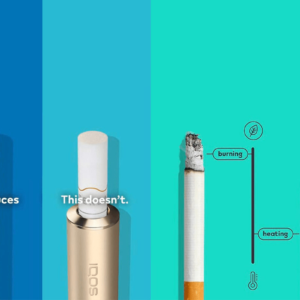
Cigarette Combustion Temperatures
Cigarettes burn at:
• 600°C resting
• up to 900°C during puffs

At these temperatures, nicotine is released along with tar and smoke.
Heated Tobacco Temperatures
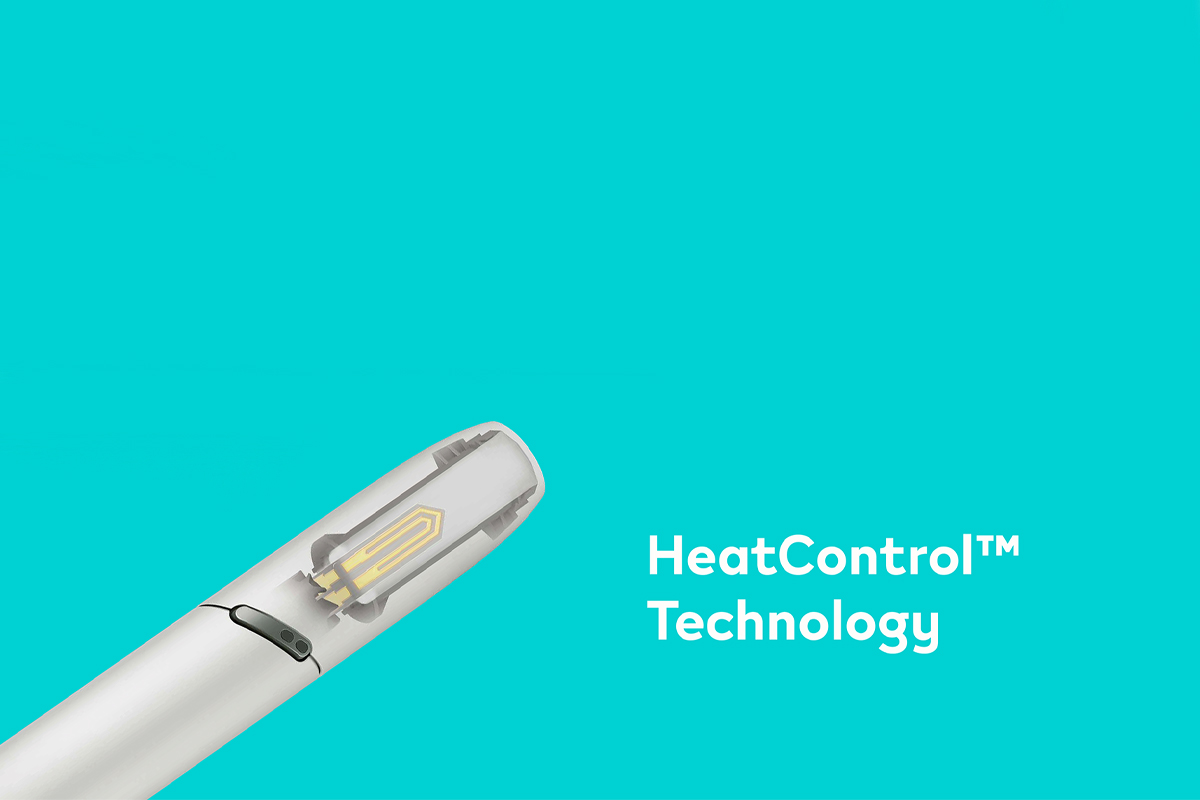
Heated tobacco devices warm tobacco at:
• 250–350°C (below combustion)
This is enough to release nicotine but not enough to create tar or smoke.
Why 300°C Is an Effective Range
At ~300°C:
• nicotine evaporates efficiently
• glycerin turns to vapor and carries nicotine
• tobacco compounds volatilize without burning
This creates a consistent aerosol.
Aerosol as a Nicotine Transport Medium
Nicotine delivery depends heavily on aerosol formation.
Heated tobacco aerosol is composed of:
• micro-droplets
• glycerin
• water vapor
• aerosolized nicotine
• volatile tobacco compounds
This aerosol must be stable enough to transport nicotine into the lungs.
Particle Size Matters
Heated tobacco aerosol typically has particle sizes around:
• 150–300 nanometers
This is smaller than cigarette smoke particles and affects:
• absorption rate
• deposition location
• delivery efficiency
How Tobacco Stick Design Influences Nicotine Delivery
Each heated tobacco stick is engineered differently.
HEETS Structural Factors
HEETS contain:
• tobacco plug
• glycerin
• binder sheet
• cooling chamber
• filter segment
The tobacco plug density and glycerin content both influence nicotine extraction.
TEREA Structural Factors
TEREA sticks use induction heating.
The metal core inside the stick reaches uniform temperatures, which enhances:
• consistent nicotine release
• uniform thermal exposure
• stable aerosol density
HEETS vs TEREA Nicotine Profiles
HEETS:
• Direct blade heating
• Slightly more temperature variability
TEREA:
• Induction-based
• More precise temperature control
• More uniform nicotine distribution
How Device Engineering Affects Nicotine Delivery
Blade-Based Devices (Older Generations)
Blade devices heat the tobacco stick internally.
Nicotine delivery depends on:
• blade position
• contact with tobacco sheet
• heating consistency
These systems sometimes produce localized hot spots.
Induction-Based Devices (Iluma)
Induction devices heat tobacco from the inside and out through an electromagnetic field.
Advantages for nicotine delivery:
• stable temperature
• repeatable sessions
• uniform aerosol generation
Device Cooling and Airflow
Airflow design influences:
• aerosol density
• nicotine concentration
• delivery efficiency
Cooling chambers condense aerosol but retain nicotine content.
User Puffing Behavior and Nicotine Delivery
Nicotine delivery changes dramatically depending on:
• puff duration
• puff interval
• puff intensity
• number of puffs
• user technique
Puff Duration
Longer puffs:
• warm tobacco more
• increase aerosol volume
• increase nicotine delivery
Short puffs yield less nicotine.
Puff Intensity
Hard puffs draw more aerosol through the stick, increasing nicotine mass per puff.
Puff Frequency
Short intervals between puffs result in:
• warmer tobacco
• higher nicotine extraction
Long intervals lower temperature and decrease delivery.
Nicotine Delivery Differences: Heated Tobacco vs Cigarettes
Factor Heated Tobacco Cigarettes
Source Tobacco sheet Tobacco leaf
Release Heating Combustion
Temperature 250–350°C 600–900°C
Aerosol Liquid droplets Smoke
Tar No Yes
Delivery Variability Medium Low
Nicotine Delivery vs Vaping
Vaping delivers nicotine differently:
• based on coil temperature
• based on nicotine salt concentration
• varies widely by device
Nicotine Delivery vs Disposable Vapes
Disposable vapes often contain nicotine salts (up to 50 mg/mL in some countries).
Heated tobacco uses nicotine naturally found in tobacco.
Regulatory Considerations for Nicotine Delivery
U.S. FDA Regulation
FDA measures:
• nicotine yields
• aerosol mass
• exposure biomarkers
In the U.S., no heated tobacco products are authorized, so nicotine delivery is studied in international markets.
EU Regulation
The EU requires reporting of:
• nicotine delivery
• aerosol composition
• exposure data
Countries regulate heated tobacco separately from cigarettes and vaping.
Scientific Research Summary
Studies indicate:
• heated tobacco delivers nicotine effectively
• delivery varies by product and user behavior
• aerosol chemistry differs from cigarettes
• nicotine delivery can be stable and consistent
Misconceptions
Misconception 1 — Heated tobacco produces more nicotine
Incorrect.
Delivery varies and is typically similar to lower-cigarette ranges.
Misconception 2 — Heated tobacco “creates” nicotine
Incorrect.
Nicotine is extracted from the tobacco itself.
Misconception 3 — Temperature doesn’t affect nicotine
Incorrect.
Nicotine release depends heavily on temperature stability.
FAQ (Educational Only)
Does heated tobacco deliver nicotine?
Yes — through aerosolization, not combustion.
Does heated tobacco have predictable nicotine delivery?
More predictable with induction systems (TEREA).
Does nicotine delivery differ from cigarettes?
Yes — due to temperature and aerosol differences.
Does heated tobacco deliver more nicotine than vaping?
Not necessarily; vaping can deliver more depending on device and liquid.