



Nicotine Tax Changes by State 2026
By 2026, nicotine taxation has become one of the most influential tools U.S. states use to shape consumer behavior and regulate nicotine markets. Unlike direct bans or product restrictions, taxes operate indirectly—raising prices, altering demand, and influencing which products remain economically viable. As states refine their fiscal strategies, nicotine taxes now play a central role in how cigarettes, vaping products, and emerging alternatives are regulated.
- Nicotine Tax Changes by State 2026
- How nicotine taxation works in the United States
- Evolution of nicotine tax policy leading into 2026
- Common nicotine tax models used by states
- Economic impact of nicotine tax increases
- Relationship between nicotine taxes and product regulation
- Why nicotine tax policy matters in 2026
- State-by-state variation in nicotine taxation
- Regional patterns in nicotine tax policy
- Enforcement and compliance challenges
- Impact of nicotine taxes on consumer behavior
- Revenue outcomes and unintended effects
- Why tax variation persists
- Interaction between nicotine taxes and sales channel regulation
- Online sales as a pressure point for tax enforcement
- Substitution effects driven by tax differences
- Long-term fiscal sustainability of nicotine taxes
Understanding nicotine tax changes by state in 2026 is essential for consumers, retailers, and policymakers. Tax policy determines not only how much nicotine products cost, but also which products gain market share, how cross-border purchasing develops, and how states balance public health goals with revenue needs.
How nicotine taxation works in the United States
Nicotine taxation in the U.S. is highly decentralized. While federal excise taxes exist for certain tobacco products, most meaningful tax decisions are made at the state level.
Federal baseline versus state authority
Federal taxes establish a minimum framework, particularly for cigarettes. However, states have broad authority to:
• set their own excise tax rates
• define which products are taxable
• determine how taxes are calculated
As a result, total tax burden varies dramatically between states, even for identical products.

Why states rely on nicotine taxes
States use nicotine taxes for several reasons. Public health advocates view higher prices as a way to discourage consumption, while state governments value nicotine taxes as a stable revenue source. These dual objectives shape how aggressively states adjust tax rates.
Policy trade-offs
Balancing public health goals with revenue stability is one of the central challenges of nicotine taxation.
Evolution of nicotine tax policy leading into 2026
Nicotine tax structures in 2026 differ significantly from those of a decade earlier.
From cigarette-only taxes to multi-product frameworks
Historically, state nicotine taxes focused almost exclusively on cigarettes. As alternative nicotine products gained popularity, states expanded tax frameworks to include vaping devices, heated tobacco, and other formats.
By 2026, most states no longer view nicotine taxation as a cigarette-only issue.
Adapting to new nicotine formats
The emergence of new products forced lawmakers to answer complex questions: should all nicotine products be taxed equally, or should harm-reduction considerations influence tax rates? States have answered these questions differently, leading to a wide range of tax models.

Lack of national consistency
There is no standardized approach to taxing nicotine products across the country, increasing complexity for businesses and consumers.
Common nicotine tax models used by states
States apply nicotine taxes using several distinct models, each with different market effects.
Per-unit and pack-based taxes
Traditional cigarette taxes are often calculated per pack. This model provides predictable revenue but does not easily translate to non-combustible products.
Percentage-of-price taxes
Some states tax nicotine products based on a percentage of wholesale or retail price. This approach automatically scales with product cost but can create price volatility.
Volume-based taxes
For certain products, states apply taxes based on liquid volume or product quantity. These taxes aim to standardize burden across different price points.
Administrative complexity
Each tax model introduces different compliance and reporting challenges for retailers and distributors.
Economic impact of nicotine tax increases
Tax changes influence markets in ways that extend beyond simple price increases.
Consumer price sensitivity
Higher taxes raise retail prices, which can reduce consumption or shift demand toward lower-cost alternatives. The extent of this shift varies by income level and product type.
Cross-border purchasing behavior
When neighboring states adopt sharply different tax rates, consumers may purchase nicotine products across state lines. This behavior can undermine tax revenue and complicate enforcement.
Uneven market outcomes
States with high taxes may see reduced in-state sales without achieving proportional reductions in overall consumption.
Relationship between nicotine taxes and product regulation
Nicotine taxes do not operate in isolation. They interact closely with other regulatory measures.
Alignment with sales and access rules
Tax increases often accompany new restrictions on sales channels, licensing, or product availability. Together, these measures reinforce regulatory objectives.
Interaction with state vape policy
Changes in nicotine taxation are closely linked to broader state-level regulation of alternative products. This relationship becomes clearer when viewed alongside US state vape laws in 2026, where taxation functions as a complementary control mechanism.
Combined regulatory pressure
When taxes and access restrictions increase simultaneously, their combined effect can be significant even without formal bans.
Why nicotine tax policy matters in 2026
By 2026, nicotine taxes influence nearly every aspect of the nicotine market.
Long-term revenue planning
States increasingly rely on nicotine taxes as part of long-term budget planning, making sudden tax reductions unlikely.
Public health signaling
Tax increases send strong policy signals about state priorities, shaping public perception and industry expectations.
Strategic importance
For businesses and consumers, understanding tax policy is essential for anticipating future regulatory changes.
State-by-state variation in nicotine taxation
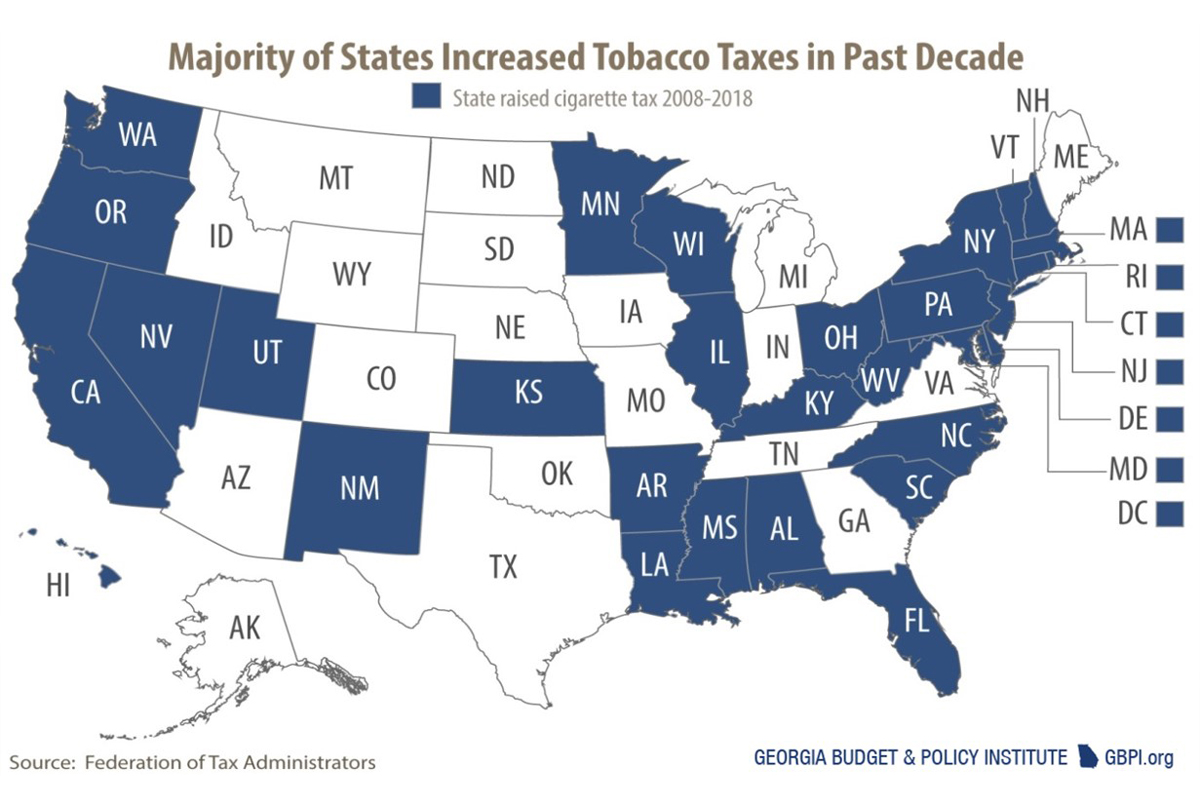
By 2026, one of the defining features of nicotine taxation in the United States is extreme variation between states. While federal policy provides a minimal baseline, state governments exercise wide discretion in determining how nicotine products are taxed. This discretion produces a highly uneven fiscal landscape where tax burdens differ sharply even between neighboring states.
Understanding these differences is essential for evaluating how nicotine tax policy functions in practice rather than in theory.
High-tax versus low-tax states
Some states impose among the highest nicotine taxes in the country, often as part of aggressive public health strategies. These states typically justify higher rates by emphasizing smoking reduction, healthcare cost savings, and long-term public health outcomes.
Other states maintain relatively low nicotine taxes, prioritizing revenue stability, economic competitiveness, or concerns about illicit trade. In these jurisdictions, lawmakers may argue that excessive taxation simply displaces sales without reducing overall consumption.
Policy divergence as a structural feature
This divergence is not accidental. It reflects deliberate choices shaped by political culture, economic structure, and historical attitudes toward tobacco regulation.
Regional patterns in nicotine tax policy
Nicotine tax variation often follows regional patterns rather than random distribution.
Regions with coordinated tax increases
In some regions, groups of states gradually raise nicotine taxes in parallel, reducing incentives for cross-border purchasing. These coordinated increases may emerge through shared public health initiatives or regional policy alignment.
Isolated high-tax states
In contrast, isolated high-tax states surrounded by lower-tax neighbors often face significant revenue leakage. Consumers in these areas may travel short distances to purchase nicotine products at lower prices, undermining state tax goals.
Border sensitivity
Geographic proximity plays a crucial role in determining how effective tax increases are in practice.
Enforcement and compliance challenges
Tax policy is only as effective as its enforcement mechanisms. By 2026, enforcement capacity varies widely across states.
Reporting and audit requirements
States impose different reporting obligations on manufacturers, distributors, and retailers. These may include detailed sales reporting, inventory tracking, and periodic audits.
In states with robust audit systems, tax compliance tends to be higher. Where oversight is limited, underreporting and tax avoidance become more common.
Penalties for non-compliance
Penalties for tax violations range from monetary fines to license suspension or revocation. Repeat offenses often trigger escalating consequences.
Compliance burden on small businesses
Smaller retailers often struggle more with complex reporting requirements, increasing their exposure to compliance risk.
Impact of nicotine taxes on consumer behavior
Nicotine taxes influence not only prices but also how consumers behave.
Price-driven consumption changes
Higher prices generally reduce consumption, but the effect varies by product type and consumer demographics. Some users reduce usage, while others seek lower-cost alternatives.
Product substitution patterns
When taxes rise on one nicotine product, consumers may shift to another product category rather than exit the market entirely. This substitution effect complicates the relationship between taxation and public health outcomes.
Uneven behavioral response
Different consumer groups respond differently to price increases, limiting the predictability of tax policy outcomes.
Revenue outcomes and unintended effects
Nicotine taxes are often justified as reliable revenue sources, but outcomes vary.
Short-term revenue gains
In many states, tax increases initially produce higher revenue. However, these gains may plateau or decline as consumption falls or sales shift elsewhere.
Illicit and informal market risks
High taxes can incentivize illicit trade, including smuggling and unregulated sales, reducing both revenue and regulatory control.
Policy trade-offs revisited
By 2026, many states recognize that excessively high taxes can undermine both revenue and public health objectives.
Why tax variation persists
Despite ongoing debate, wide variation in nicotine tax policy is likely to continue.
State autonomy and political realities
Taxation remains a core state power, and political resistance to harmonization is strong.
Lack of federal coordination
Without strong federal intervention, states will continue to pursue independent tax strategies.
Structural permanence
Variation in nicotine taxes is not a temporary condition but a defining feature of the U.S. regulatory system.
Interaction between nicotine taxes and sales channel regulation
By 2026, nicotine taxation no longer functions as an isolated policy instrument. Instead, tax changes increasingly interact with rules governing where and how nicotine products can be sold. This interaction shapes real-world outcomes far more than tax rates alone.
States that raise nicotine taxes often pair those increases with tighter controls on distribution channels, amplifying the impact on both consumers and businesses.
Why taxation and sales rules move together
Lawmakers frequently view taxation and sales regulation as complementary tools. Higher prices discourage consumption, while sales restrictions limit access points. When implemented together, these measures reinforce each other’s effects.
For example, a moderate tax increase may have limited impact if products remain widely available. However, the same tax increase combined with stricter sales rules can significantly reduce consumption and retail participation.
Policy coordination effect
This coordination explains why nicotine taxes in 2026 often coincide with broader regulatory packages rather than standing alone.
Online sales as a pressure point for tax enforcement
Remote commerce presents unique challenges for nicotine tax enforcement. Unlike in-store transactions, online sales can involve multiple jurisdictions, complicating tax collection and oversight.
Tax compliance challenges in online sales
When nicotine products are sold online, determining which state’s tax applies can be complex. States increasingly require sellers to calculate, collect, and remit taxes based on the buyer’s location rather than the seller’s.
These challenges are part of a broader regulatory trend affecting remote commerce, which is explored in detail in online sales restrictions for nicotine products.
Enforcement gaps and policy response
States concerned about lost tax revenue often respond by restricting or banning online sales entirely. In doing so, they address both age-verification concerns and tax compliance issues simultaneously.
Impact on market access
As online sales become more restricted, consumers face fewer purchasing options, while states gain greater control over tax collection.
Substitution effects driven by tax differences
Nicotine taxes influence not only how much consumers pay, but also which products they choose.
Switching between nicotine categories
When taxes rise sharply on one product category, consumers may shift to alternatives that carry lower tax burdens. This substitution can occur between cigarettes, vaping products, heated tobacco, and other nicotine formats.
From a policy perspective, substitution complicates outcome measurement. Reduced sales of one product may not equate to reduced nicotine use overall.
Geographic substitution
Tax disparities between states encourage geographic substitution. Consumers living near state borders may purchase nicotine products in lower-tax jurisdictions, reducing in-state sales without reducing consumption.
Enforcement limitations
Even aggressive enforcement struggles to fully eliminate cross-border purchasing, particularly in densely populated regions.
Long-term fiscal sustainability of nicotine taxes
By 2026, many states face questions about the long-term sustainability of nicotine tax revenue.
Declining tax base risk
As consumption declines or shifts to lower-tax products, the tax base may shrink. States relying heavily on nicotine taxes must plan for potential revenue instability.