

How to Choose the Right Nicotine Strength — A Device-Based Practical Guide
Choosing nicotine strength is often presented as a simple number decision — pick a percentage, pick a milligram value, and you’re done. In reality, strength selection is not a single-variable choice. It is a system decision that depends on device class, nicotine formulation, airflow behavior, and puff style.
- How to Choose the Right Nicotine Strength — A Device-Based Practical Guide
- What Nicotine Strength Numbers Actually Mean
- Device Class Comes First — Not Strength Number
- Formulation Type Changes Usable Strength Range
- Pod Systems — Strength Is Paired with Cartridge Design
- Disposable Devices — Fixed Output Means Careful Strength Matching
- Puff Duration — The Hidden Strength Multiplier
- Practical Strength Selection — Start with Usage Pattern, Not Just Numbers
- Format-Based Strength Tendencies — Why Device Type Guides Range
- Symptoms of Too-Low Nicotine Strength
- Symptoms of Too-High Nicotine Strength
- Strength Adjustment — Step Changes Work Better Than Big Jumps
- Scenario Selection — Occasional vs Regular vs Heavy Use
- Device + Formulation + Strength — The Three-Factor Model
- Adjustment Strategy — How to Tune Strength Over Time
- Final Technical Takeaway
Two people using the same labeled nicotine strength can have completely different experiences — because their devices and puff patterns differ. One may feel under-satisfied and overuse the device. Another may find the same strength too intense and shorten every puff. Both outcomes come from mismatch — not from the number itself.
Nicotine strength should always be selected in context:
• device format
• formulation type
• airflow tightness
• coil power range
• puff duration habits
This guide explains strength selection from a technical and behavioral standpoint — not from marketing categories.
What Nicotine Strength Numbers Actually Mean
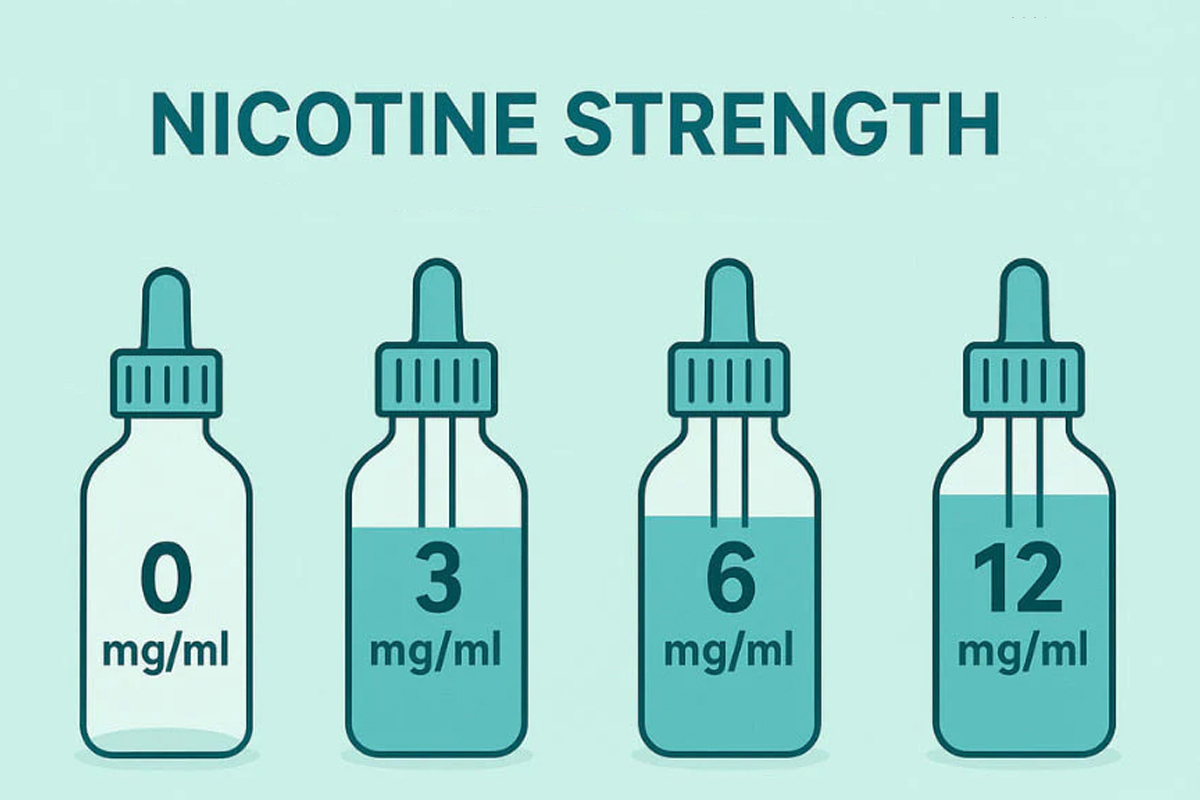
Nicotine strength is usually shown in either:
• mg/mL (milligrams per milliliter)
• percentage (%)
You may also Like
These are concentration measurements — not delivery measurements.
They describe how much nicotine is present in the liquid — not how much is delivered per puff.
Delivery depends on:
• aerosol mass
• puff length
• device heat curve
• airflow dilution
• formulation behavior
This is why strength must be interpreted together with delivery mechanics — especially in compact cartridge systems described in how pod systems work internally — where aerosol density and puff size are tightly controlled.
A higher number does not automatically mean stronger real-world effect. It means higher concentration potential.
Device Class Comes First — Not Strength Number
Before choosing nicotine strength, you must identify the device class. Device output range defines how much aerosol is produced per puff — and that changes how much nicotine is transferred.
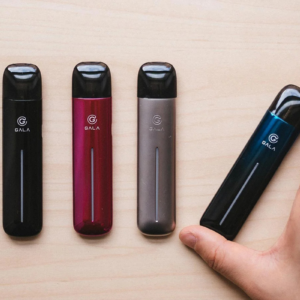
Compact pod and cartridge systems produce:
• smaller aerosol volume per puff
• tighter airflow
• moderate heat
Disposable sealed systems produce:
• fixed aerosol volume
• preset heat
• preset airflow
Higher-power adjustable devices produce:
• larger aerosol volume
• wider airflow
• broader heat range
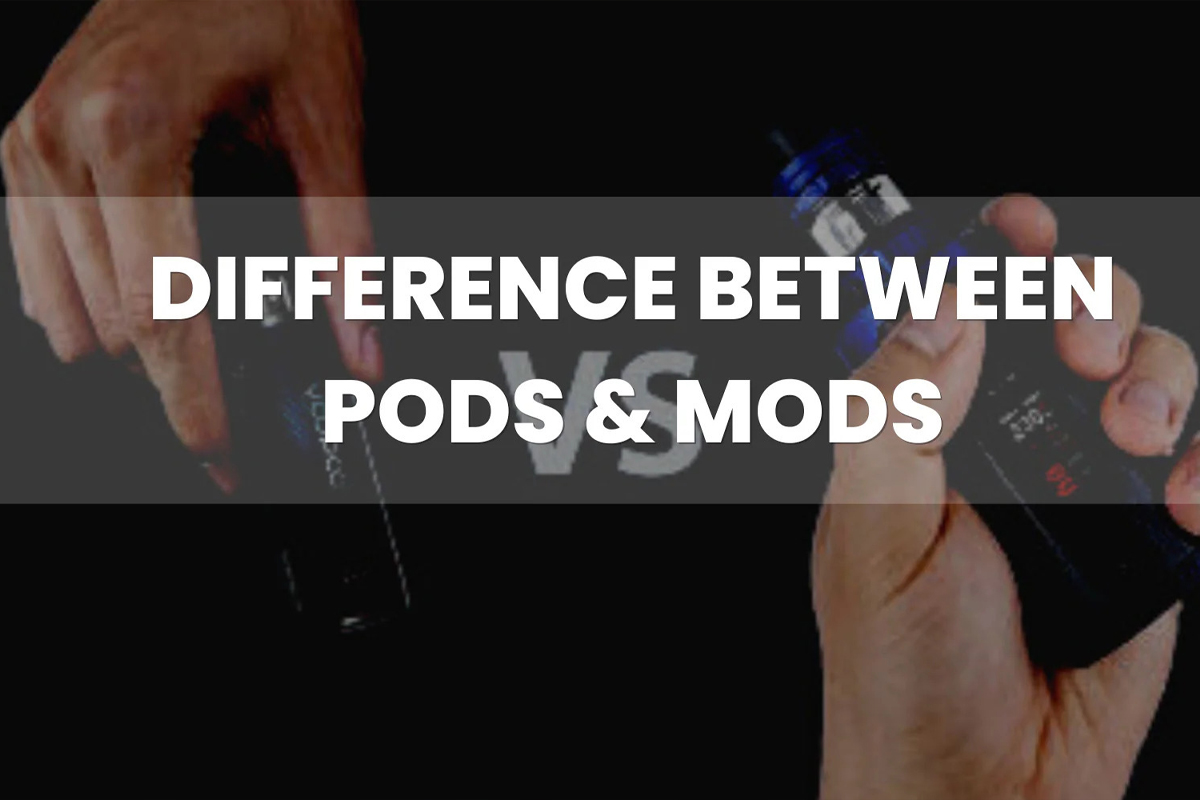
These class differences are explained at a system level in pods compared with mod-style devices — where output variability becomes the key separator.
General engineering principle:
Lower aerosol volume per puff → typically requires higher concentration
Higher aerosol volume per puff → typically uses lower concentration
Strength selection starts with aerosol class — not preference alone.
Formulation Type Changes Usable Strength Range
Nicotine formulation strongly affects how a given strength feels during inhalation.
The chemical and behavioral differences are explained in freebase vs nicotine salts comparison — and they directly influence usable strength range.
Freebase characteristics:
• sharper throat sensation
• stronger inhale feedback
• lower comfort at high strengths
Salt characteristics:
• smoother inhale
• higher tolerance at higher strengths
• more stable puff duration
Because salts feel smoother, users can often tolerate higher labeled strengths without shortening puffs. That changes real delivery behavior.
Formulation therefore shifts the usable window, not just the sensation.
Pod Systems — Strength Is Paired with Cartridge Design
In pod systems, nicotine strength is not chosen independently from cartridge engineering. Cartridge airflow, coil heat, and chamber size are tuned to a target formulation and strength band.
Pod cartridge construction — including liquid channels and heating geometry — is detailed in pod cartridge ingredients and structure.
Because pod systems operate in moderate power ranges with tight airflow, they are often paired with:
• moderate-to-higher strength salt formulations
• controlled aerosol density
• repeatable puff size
This pairing is not marketing — it is thermal and airflow matching.
Changing strength too far outside the cartridge’s intended band often produces unstable puff behavior rather than better results.
Disposable Devices — Fixed Output Means Careful Strength Matching
Disposable devices remove user control over power and airflow. That means strength must match the preset output curve.
The internal operating limits of sealed devices are explained in how disposable vape systems function — where coil heat and airflow are fixed at the factory.
Because output is fixed:
• users cannot compensate with power adjustment
• puff behavior becomes the only control variable
• formulation smoothness becomes more important
That is one reason many disposable devices are paired with smoother formulations and calibrated strength bands.
Format comparison behavior — including delivery differences — is analyzed in disposable vs pod systems, which helps explain why equal strengths feel different across formats.
Puff Duration — The Hidden Strength Multiplier
Nicotine intake per puff is strongly influenced by puff duration. This is the hidden multiplier most users ignore.
Longer puff:
• more aerosol mass
• more nicotine transfer
• stronger effect
Shorter puff:
• less aerosol
• less transfer
• weaker effect
Nicotine delivery mechanics — including how aerosol carries nicotine — are explained in nicotine delivery in pod devices.
Strength that causes puff shortening is often too high for the user-device pair — even if the number looks correct.
Comfortable puff duration is one of the best real-world indicators of correct strength.
Practical Strength Selection — Start with Usage Pattern, Not Just Numbers
Nicotine strength selection becomes much easier when you begin with usage pattern instead of label numbers.
Three behavioral variables matter most:
• how often you puff
• how long each puff lasts
• how tight or open the draw feels
Strength should match your natural puff rhythm — not force you to change it dramatically.
If strength is too low for your pattern:
• you puff more often
• sessions become longer
• device heating cycles increase
• satisfaction remains inconsistent
If strength is too high:
• puffs become very short
• throat sensation dominates
• pacing becomes irregular
• overall experience feels “spiky” rather than stable
Correct strength produces steady puff rhythm — not forced micro-puffs or chain use.
Format-Based Strength Tendencies — Why Device Type Guides Range
Different device formats tend to operate in different effective strength bands — not because of rules, but because of aerosol output per puff.
Compact cartridge and pod platforms — structurally explained in how pod systems are built and operate — produce smaller, denser puffs with tighter airflow. These systems are typically paired with moderate or higher concentration liquids.
Disposable sealed devices — whose output is factory-fixed — behave similarly in aerosol volume, but with lifecycle-calibrated pairing, as described in disposable vape internal mechanics.
Higher-output adjustable devices produce more aerosol per puff — which shifts usable concentration downward.
Engineering logic:
smaller puff volume → higher concentration band
larger puff volume → lower concentration band
This is output matching — not preference matching.
Symptoms of Too-Low Nicotine Strength
Too-low strength rarely feels dramatic — but it produces recognizable patterns.
Common indicators include:
• frequent repeated puffing
• long continuous sessions
• feeling “almost satisfied but not quite”
• increasing puff duration over time
• overheating cartridges from repetition
Users often misinterpret this as device weakness or poor flavor — when the real cause is strength mismatch.
Too-low strength drives behavioral compensation — more puffs to reach the same effect. That compensation increases coil stress and liquid consumption without improving stability.
Strength should reduce compensation — not cause it.
Symptoms of Too-High Nicotine Strength
Too-high strength produces more immediate feedback — but users often mislabel it as device harshness.
Typical signs:
• very short puffs only
• throat sensation overrides flavor
• delayed follow-up puffs
• irregular pacing
• device avoidance after short use
In these cases, users often assume the device or formulation is “bad,” when the real issue is concentration mismatch.
Formulation smoothness can partially mask this — which is why formulation differences discussed in freebase vs nicotine salt behavior must be considered alongside strength.
Smooth does not mean low. Harsh does not mean high. But patterns still reveal mismatch.
Strength Adjustment — Step Changes Work Better Than Big Jumps
Nicotine strength should usually be adjusted in small steps, not dramatic jumps.
Why step changes work better:
• puff behavior adapts gradually
• perception recalibrates
• pacing stabilizes
• device stress stays predictable
Large jumps often produce overcorrection:
too high → avoidance
too low → overuse
Because delivery efficiency varies by cartridge structure and airflow geometry — described in pod cartridge construction details — even equal numeric steps can feel different across pod models.
Adjustment should be device-specific, not just number-specific.
Scenario Selection — Occasional vs Regular vs Heavy Use
Strength choice also depends on how the device is used across the day.
Occasional-use pattern:
• fewer sessions
• longer gaps
• often tolerates higher concentration band
Regular spaced-use pattern:
• steady sessions
• moderate spacing
• mid concentration band often stable
Frequent-use pattern:
• short intervals
• repeated puffs
• often benefits from lower concentration band
This is not about categories of people — it is about puff frequency and spacing. Delivery is behavior-coupled.
Device format comparisons — including how patterns differ between sealed and modular systems — are outlined in disposable vs pod format behavior.
Pattern first — number second.
Device + Formulation + Strength — The Three-Factor Model
Nicotine strength should never be chosen as a single variable. It should be selected using a three-factor model:
device class
nicotine formulation
user puff behavior
Device class defines aerosol volume.
Formulation defines inhale tolerance.
Behavior defines actual transfer.
When all three are aligned, delivery becomes predictable.
When one factor is misaligned, users experience instability — even if the numeric strength looks reasonable.
This systems view also helps separate engineering reality from public confusion — which is why myth correction and evidence framing resources such as common vaping myths explained are useful reference points when evaluating strength claims.
Adjustment Strategy — How to Tune Strength Over Time
Nicotine strength is not always a permanent setting. Many users adjust over time — and that is expected.
Stable adjustment strategy:
• change one step at a time
• keep device constant while testing
• observe puff behavior changes
• watch session length and spacing
• avoid same-day multi-step jumps
Do not change:
strength + device + formulation
all at once.
If all three change, results become impossible to interpret.
Engineering testing changes one variable at a time. Strength tuning should follow the same logic.
Final Technical Takeaway
Nicotine strength is not just a label — it is a delivery tuning parameter.
Correct strength selection depends on:
• aerosol output of the device
• formulation behavior
• puff duration patterns
• spacing rhythm
• cartridge condition
When strength is matched correctly:
• puff behavior stabilizes
• delivery becomes predictable
• device stress decreases
• satisfaction becomes consistent
When strength is mismatched:
• behavior compensates
• delivery fluctuates
• experience feels unreliable
Choose strength as part of a system — not as a number in isolation.