


Vaping Myths Explained — Technical Facts vs Common Misconceptions
Public discussion about vaping and e-cigarettes is filled with confident statements — but many of them are built on misunderstandings of device mechanics, study design, and formulation chemistry. Myths spread easily because vape devices look simple from the outside while operating as tightly engineered thermal-aerosol systems on the inside.
- Vaping Myths Explained — Technical Facts vs Common Misconceptions
- Myth — “All Vape Devices Work the Same”
- Myth — “More Vapor Means More Harm”
- Myth — “Nicotine Salts Are a Different Drug”
- Myth — “Higher Nicotine % Always Means Stronger Effect”
- Myth — “Disposable Devices Are Just Cheap Pods”
- Myth — “Nicotine Delivery Equals Total Exposure”
- Myth — “One Study Proves Everything”
- Myth — “If It’s Simple to Use, It Must Be Simple Inside”
- Myth — “All Coils and Liquids Behave the Same”
- Myth — “Headlines Equal Scientific Conclusions”
- Myth — “User Behavior Doesn’t Matter”
- Myth — “Strength Choice Is Only About Preference”
- Myth — “If Results Vary, Research Is Unreliable”
- Myth — “One Factor Explains Everything”
- Myth — “Technical Uncertainty Means No Knowledge”
- A Practical Myth-Filter Framework
- Final Technical Takeaway
When device class, puff behavior, and research method are ignored, conclusions become distorted. A stress test becomes “normal use.” A high-power device result becomes “all devices.” A chemistry measurement becomes a health outcome claim.
This article explains the most common vaping myths using technical reasoning — separating:
• device class differences
• laboratory vs real-use conditions
• formulation vs strength
• aerosol vs exposure
• correlation vs mechanism
The goal is not persuasion — but clarification.
Myth — “All Vape Devices Work the Same”
One of the most fundamental myths is treating all vape devices as a single technical category. In reality, there are distinct device classes with different operating envelopes.
You may also Like

Major classes include:
• compact pod systems
• sealed disposable devices
• adjustable mod platforms
These classes differ in:
• power range
• airflow envelope
• coil mass
• liquid feed structure
• aerosol volume per puff
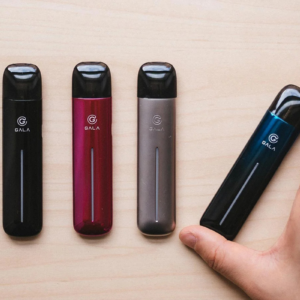
Compact calibrated platforms are explained in how pod systems work internally — where sensor activation, regulated power, and cartridge pairing define behavior.
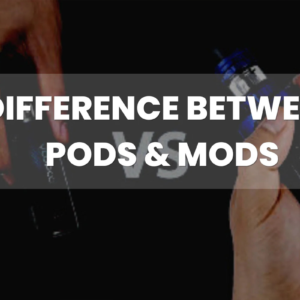
Adjustable platforms operate under a different philosophy, as outlined in pods vs mods technical comparison.
When a claim ignores device class, it is already technically incomplete.
Myth — “More Vapor Means More Harm”
Visible vapor volume is often mistaken for risk level. This is a measurement confusion.
Visible aerosol volume depends on:
• airflow openness
• aerosol cooling
• droplet size
• lighting conditions
• carrier ratio
Chemical exposure depends on:
• temperature
• compound formation
• puff protocol
• device class
• operating envelope
Large visible clouds come from high aerosol volume — not automatically from higher compound concentration per unit mass.
Compact systems often produce denser but smaller aerosol puffs, while open systems produce larger but more diluted clouds. Visual size is not a reliable proxy for chemistry.
Output differences across compact formats are clearer when comparing disposable and pod device behavior.
Visibility is not a measurement instrument.
Myth — “Nicotine Salts Are a Different Drug”
Nicotine salts are often described incorrectly as a different substance. Technically, they are a different formulation form, not a different drug.
Nicotine salt formulations modify:
• pH environment
• inhale smoothness
• strength tolerance window
They do not replace nicotine with another active compound.
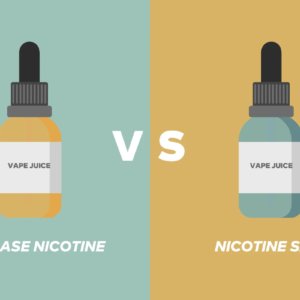
The formulation chemistry and inhale behavior differences are explained in freebase vs nicotine salt comparison.
Form affects sensation and puff behavior. It does not change the core molecule being delivered.
Myth — “Higher Nicotine % Always Means Stronger Effect”
Label strength is concentration — not delivered dose per puff.
Delivered nicotine depends on:
• puff duration
• aerosol mass
• device output
• airflow dilution
• formulation smoothness
Two users with the same labeled strength can receive different effective intake depending on puff length and device class.
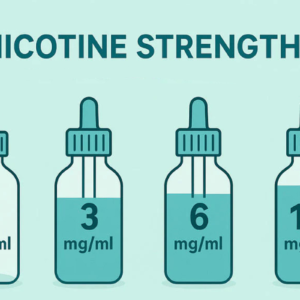
Strength selection behavior — including mismatch symptoms — is detailed in how to choose the right nicotine strength.
Concentration is potential. Delivery is behavior plus mechanics.
Myth — “Disposable Devices Are Just Cheap Pods”
Disposable devices and pod systems are sometimes described as interchangeable. Mechanically, they are not.
Disposable devices integrate:
• battery
• coil
• reservoir
• airflow
• electronics
into a sealed one-life structure — as explained in how disposable vape systems work.
Pod systems separate reusable power base and replaceable cartridge. That modularity changes:
• lifecycle model
• coil matching
• regulation behavior
• maintenance pattern
They may look similar in size — but not in architecture.
Myth — “Nicotine Delivery Equals Total Exposure”
Nicotine delivery studies and safety exposure studies measure different things — but are often confused.
Delivery studies measure:
• how nicotine transfers per puff
• absorption markers
• delivery curves
Exposure studies measure:
• non-nicotine compounds
• aerosol chemistry
• temperature byproducts
Delivery mechanics — including puff-dependent transfer — are explained in nicotine delivery behavior in pod devices.
A device can deliver nicotine efficiently while still having variable non-nicotine emissions depending on protocol. These are parallel measurements — not identical ones.
Myth — “One Study Proves Everything”
Single studies are frequently treated as final proof. In science, replication matters more than single results.
Safety interpretation requires:
• multiple studies
• varied protocols
• device-class control
• replication across labs
Research structure and limits are outlined in e-cigarette safety research overview — where study types and interpretation boundaries are explained.
Method defines meaning. One paper does not define a field.
Myth — “If It’s Simple to Use, It Must Be Simple Inside”
Compact vape devices are often dismissed as technically trivial because they are easy to operate. That is a misunderstanding of engineering layering.
Ease of use comes from internal automation, not from internal simplicity.
Compact systems integrate:
• activation sensors
• regulation circuits
• coil matching
• airflow routing
• pressure balance
• wick feed control
• chamber geometry
User simplicity is achieved through hidden engineering complexity.
This same misunderstanding appears in many technology fields: user interface simplicity does not equal internal mechanical simplicity.
Myth — “All Coils and Liquids Behave the Same”
Another oversimplification myth assumes coils and liquids are interchangeable without behavioral change.
In reality, coil–liquid interaction depends on:
• wick material
• coil mass
• chamber size
• airflow speed
• liquid viscosity
• formulation chemistry
Changing any of these changes:
• aerosol density
• temperature curve
• condensation pattern
• flavor stability
• emission profile
This is why device calibration matters — and why cartridge-matched systems behave more predictably than mixed-component setups.
There is no universal coil behavior independent of liquid and airflow.
Myth — “Headlines Equal Scientific Conclusions”
Media summaries often compress complex studies into short statements. In that compression, key technical qualifiers are frequently lost.
Typical headline distortions include:
• removing device class context
• removing puff protocol details
• merging stress tests with normal tests
• converting lab chemistry into health outcome claims
• treating correlation as causation
A chemistry detection is not automatically a risk magnitude statement. A correlation trend is not automatically a mechanism.
Technical reading requires method details — not just outcome phrases.
Myth — “User Behavior Doesn’t Matter”
Some claims treat device output as if it were independent of user behavior.
That is mechanically incorrect.
User behavior directly affects:
• coil temperature
• wick recovery
• aerosol density
• puff volume
• compound formation range
Behavior variables include:
• puff length
• spacing
• draw strength
• chain use
• device maintenance
Two users with the same device and liquid can produce different emission profiles purely through behavior differences.
Behavior is part of the system — not external to it.
Myth — “Strength Choice Is Only About Preference”
Nicotine strength is often framed as pure preference. Technically, it is also a mechanical pairing variable.
Strength affects:
• puff duration
• puff frequency
• coil heating rhythm
• session length
• aerosol intake pattern
Too-low strength → compensation puffing
Too-high strength → puff shortening
Both patterns change thermal behavior and exposure profile. Strength choice is therefore part of device operation — not just taste preference.
Myth — “If Results Vary, Research Is Unreliable”
Variability across studies is sometimes presented as proof that research is unreliable. In engineering and aerosol science, variability is expected — because systems are multi-variable.
Variation can come from:
• puff protocol differences
• device class differences
• coil design differences
• formulation differences
• airflow differences
• measurement instruments
Good research reports variability ranges — not just single numbers. Range reporting is a strength, not a weakness. It reflects system sensitivity honestly.
Consistency across controlled protocols matters more than identical numbers across all protocols.
Myth — “One Factor Explains Everything”
Single-factor explanations are attractive — and usually wrong.
Examples of oversimplified claims:
• “temperature alone determines outcome”
• “nicotine form alone determines risk”
• “device type alone determines exposure”
Real systems are multi-factor:
temperature × airflow × wick state × formulation × behavior × device class
Remove one factor from the equation — and interpretation becomes distorted.
Engineering systems rarely have single-cause outcomes. Vape aerosol systems are no exception.
Myth — “Technical Uncertainty Means No Knowledge”
Another misconception is that because long-term and lifetime outcomes are still being studied, nothing is known. This is false framing.
Science often has:
• high confidence in short-term mechanisms
• moderate confidence in medium-range comparisons
• lower confidence in long-range projections
Different confidence layers can coexist.
For vape research, there is strong technical understanding of:
• aerosol formation mechanics
• temperature dependence
• puff protocol effects
• device class differences
• formulation behavior
Long-term projections naturally require longer timelines. Partial knowledge is not zero knowledge.
Uncertainty boundaries are part of honest science.
A Practical Myth-Filter Framework
Readers can filter vape claims using a simple technical checklist:
Does the claim specify device class?
If not — incomplete.
Does it describe puff protocol?
If not — context missing.
Does it separate lab vs real use?
If not — category confusion.
Does it report concentration or just detection?
If detection only — incomplete.
Does it rely on one study?
If yes — provisional.
Does it control variables in comparisons?
If not — weak comparison.
This filter removes most distorted claims quickly.
Final Technical Takeaway
Most vaping myths come from category errors:
• mixing device classes
• mixing protocols
• mixing detection with danger
• mixing correlation with mechanism
• mixing worst-case with normal-use
Vape devices are engineered aerosol systems. Their behavior depends on operating envelope, formulation pairing, and puff pattern. Claims that ignore these variables are technically weak by definition.
Clear thinking comes from method awareness.
Method awareness dissolves most myths.